1. A clear arrival
Mark the transition from house to garden with a change of surface, a gateway of planting or an arch. Thresholds tell the mind it has entered a different place.
Gardens shaped by soil, shelter, light and the creatures that share them.
Home / Restful Spaces
Therapeutic outdoor spacesA restful garden is not simply a quiet one. It is arranged so attention can settle, the body feels sheltered, and a few minutes outside genuinely help you recover from the day.
In 1984 Roger Ulrich published a study of patients recovering from gallbladder surgery in a Pennsylvania hospital. Those whose windows looked onto trees had, on average, shorter stays and needed fewer strong painkillers than those facing a brick wall. The study is modest in scale, but it helped launch decades of research into restorative environments.
The Kaplans' Attention Restoration Theory offers an explanation. Daily life demands directed attention, which tires. Natural settings hold attention gently, through moving leaves, clouds or water, in a way they called soft fascination, letting the effortful kind recover.
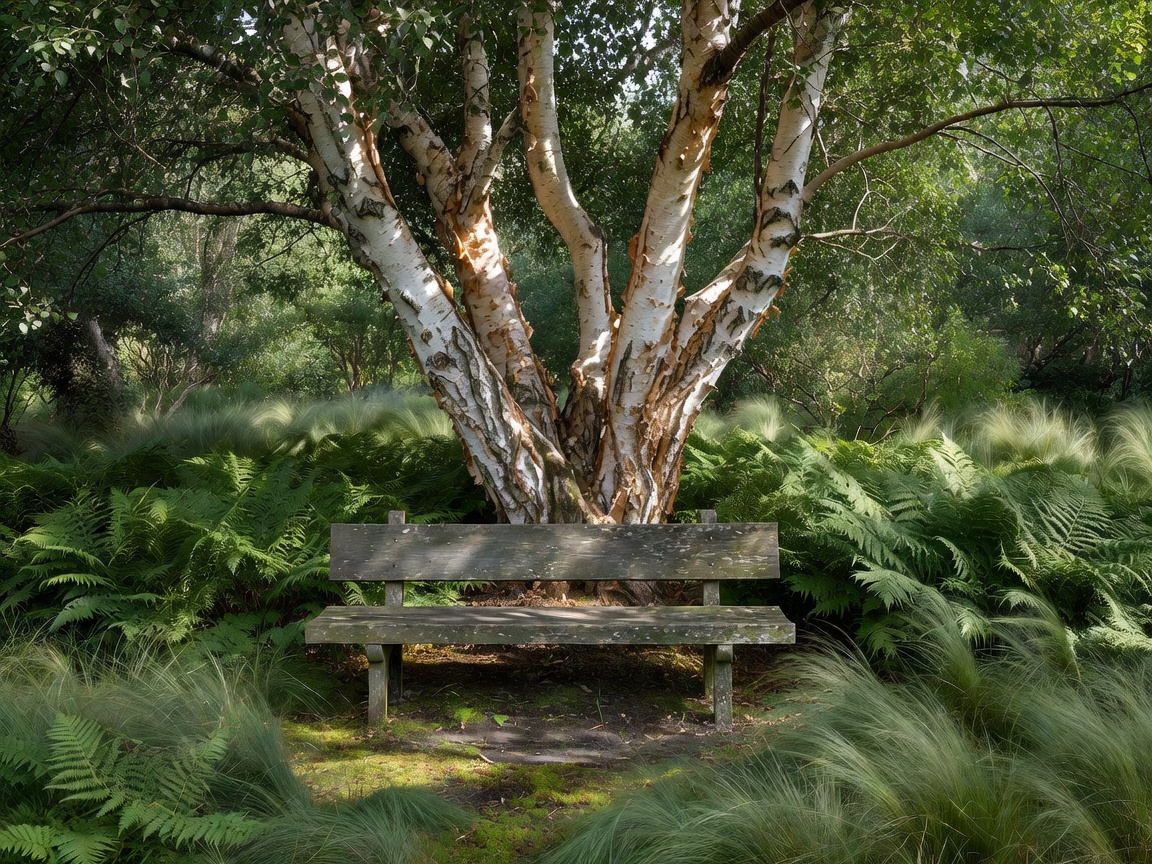
Notice where you already linger. It might be the step where morning sun lands, or the corner furthest from the road. Equally, note what disturbs: overlooking windows, a neighbour's extractor fan, a busy footpath, glare off a white wall. A restful layout amplifies the first and buffers the second, often with planting rather than solid barriers.
Mark the transition from house to garden with a change of surface, a gateway of planting or an arch. Thresholds tell the mind it has entered a different place.
Paths that circle back avoid dead ends and invite a short wander. Slight curves that hide what is next add gentle curiosity.
Place the main seat with cover behind and an outlook in front. Make it comfortable enough to stay twenty minutes, not two.
Repeat a handful of plants in drifts and limit hard materials to two or three. Fewer contrasts mean less visual effort.
Grasses, a birch, a bird bath or a slow water spill provide the soft fascination that restores attention.
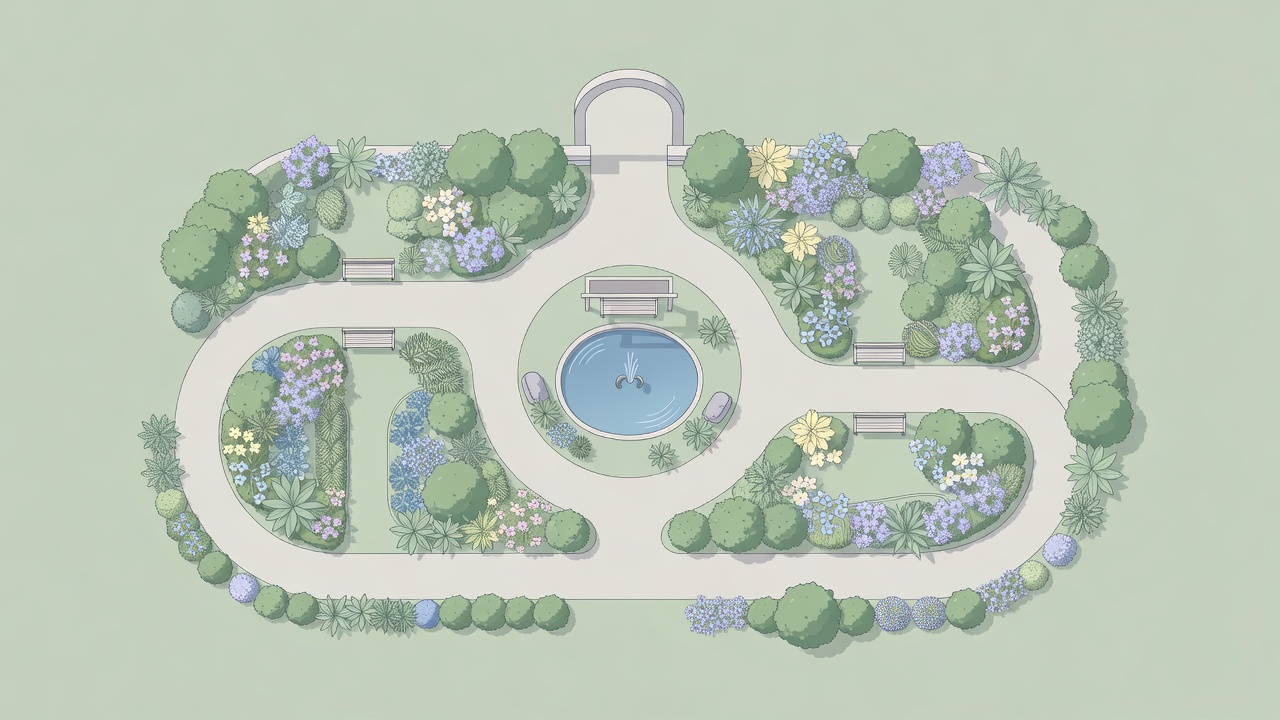
Gentle sound is one of the most effective calming tools. A small recirculating bowl or a rill gives a steady, non-intrusive trickle that masks traffic without dominating. Birdsong follows naturally once habitat is in place. Avoid wind chimes in shared spaces, where one person's calm is another's irritation.
Enclosure should feel protective, not confining. Planting or screens at about head height when seated, around 1.2 to 1.5 metres, creates a room while keeping the sky open. The Terrapin Bright Green framework describes this balance in its patterns of Prospect and Refuge, and lists others relevant to gardens such as Non-Rhythmic Sensory Stimuli, Thermal and Airflow Variability, and Presence of Water.
Rest is not only sitting. The UK charity Thrive has long used social and therapeutic horticulture to support wellbeing, and many people find that light, repetitive tasks such as deadheading, sowing or sweeping are themselves restorative. Include a raised bed at a comfortable working height, a potting bench in the shade and a tap close by, so small acts of care are easy.
Restorative environments should work for everyone who uses them. Firm, level paths at least 1.2 metres wide accommodate wheelchairs and walking aids. Seats with arms and backs help people rise. Shade is essential for older visitors and people sensitive to heat. For neurodivergent family members, a predictable layout, a quiet nook and a choice of sensory intensity across the garden can matter more than any planting scheme. The Maggie's Centres, designed with architects such as Frank Gehry and Rogers Stirk Harbour + Partners, show how carefully considered gardens can support people through difficult times.
Cookies on this site
Essential cookies keep this site working. Optional ones help us see what is useful. You can change your choice at any time. Read more